HSK E and HSK F are both high-speed hollow shank interface standards designed for precision machining, but they are optimized for different applications. HSK E is primarily intended for lightweight, ultra-high-speed operations requiring exceptional concentricity and minimal rotating mass, while HSK F offers higher torque transmission and greater rigidity for heavier milling applications. Choosing the correct interface directly affects machining accuracy, spindle life, tool stability, and production efficiency.
Whether you're selecting a new HSK tool holder, upgrading your machining center, or comparing different HSK tool holder types, understanding these differences helps prevent compatibility issues and maximize machining performance.
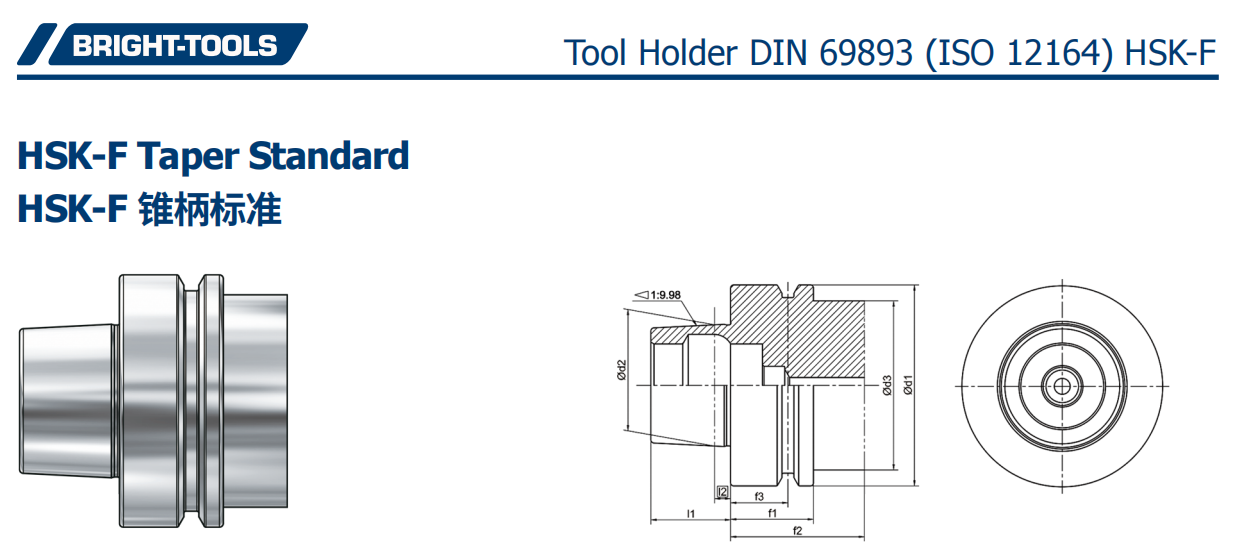
Both HSK E and HSK F belong to the DIN 69893/ISO 12164 Hollow Shank Taper standard.
Unlike conventional steep taper systems, the HSK taper features dual-contact between the taper and the spindle face. This design provides:
Excellent positioning repeatability
High rigidity
Superior balance at high spindle speeds
Fast automatic tool changes
Thermal expansion compensation
The primary difference lies in the drive-key design, flange geometry, and intended machining applications.
Typical sizes include:
HSK E25 tool holder
HSK E32 tool holder
HSK E40 tool holder
HSK E50 tool holder
HSK 40E tool holder
HSK 63F
HSK 63 tool holder
HSK F63 tool holder
| Feature | HSK E | HSK F |
|---|---|---|
| Primary application | Ultra-high-speed machining | High-speed cutting with higher torque |
| Typical industries | Electronics, PCB, graphite, medical | Mold making, aluminum, automotive, aerospace |
| Drive slots | Smaller | Larger |
| Torque transmission | Moderate | Higher |
| Rotating mass | Lower | Slightly higher |
| Tool balance | Excellent | Excellent |
| Recommended spindle speed | Extremely high RPM | High RPM with heavier cutting |
The larger drive keys on HSK F increase torque transmission, making it more suitable for aggressive milling operations using larger diameter cutters.
Yes—when spindle speed is the primary requirement.
The lightweight flange structure of HSK E reduces centrifugal force during rotation. Combined with highly balanced tooling, this makes HSK E ideal for:
Graphite machining
PCB drilling
Micro milling
Medical component production
Precision electronics
Small carbide tools
For example:
HSK E25 tool holder for micro tools
HSK E32 tool holder for precision engraving
HSK E40 tool holder for high-speed mold finishing
HSK E50 tool holder for larger precision cutters
Manufacturers running spindles above 30,000 RPM often prefer HSK E interfaces.
The HSK 63F interface provides stronger drive engagement between spindle and tool holder.
Compared with HSK E, HSK 63 F offers:
Higher torque capacity
Better resistance to cutter slippage
Improved rigidity
Greater stability during interrupted cutting
Better performance with larger face mills
Typical applications include:
Aluminum roughing
Steel finishing
Mold manufacturing
Automotive parts
Aerospace structural components
Many machining centers equipped with 18,000–24,000 RPM spindles use the HSK F63 tool holder as the standard configuration.
Generally, no.
Although both belong to the HSK family, their drive-key configurations are different.
The HSK spindle taper may appear similar, but the spindle orientation slots are specifically designed for either HSK E or HSK F.
Using the wrong interface may result in:
Improper tool seating
Reduced torque transmission
Positioning errors
Tool pullout
Spindle damage
Always verify your machine manufacturer's spindle specification before purchasing a tool holder HSK.
Modern HSK tool holders are available in numerous configurations for different machining requirements.
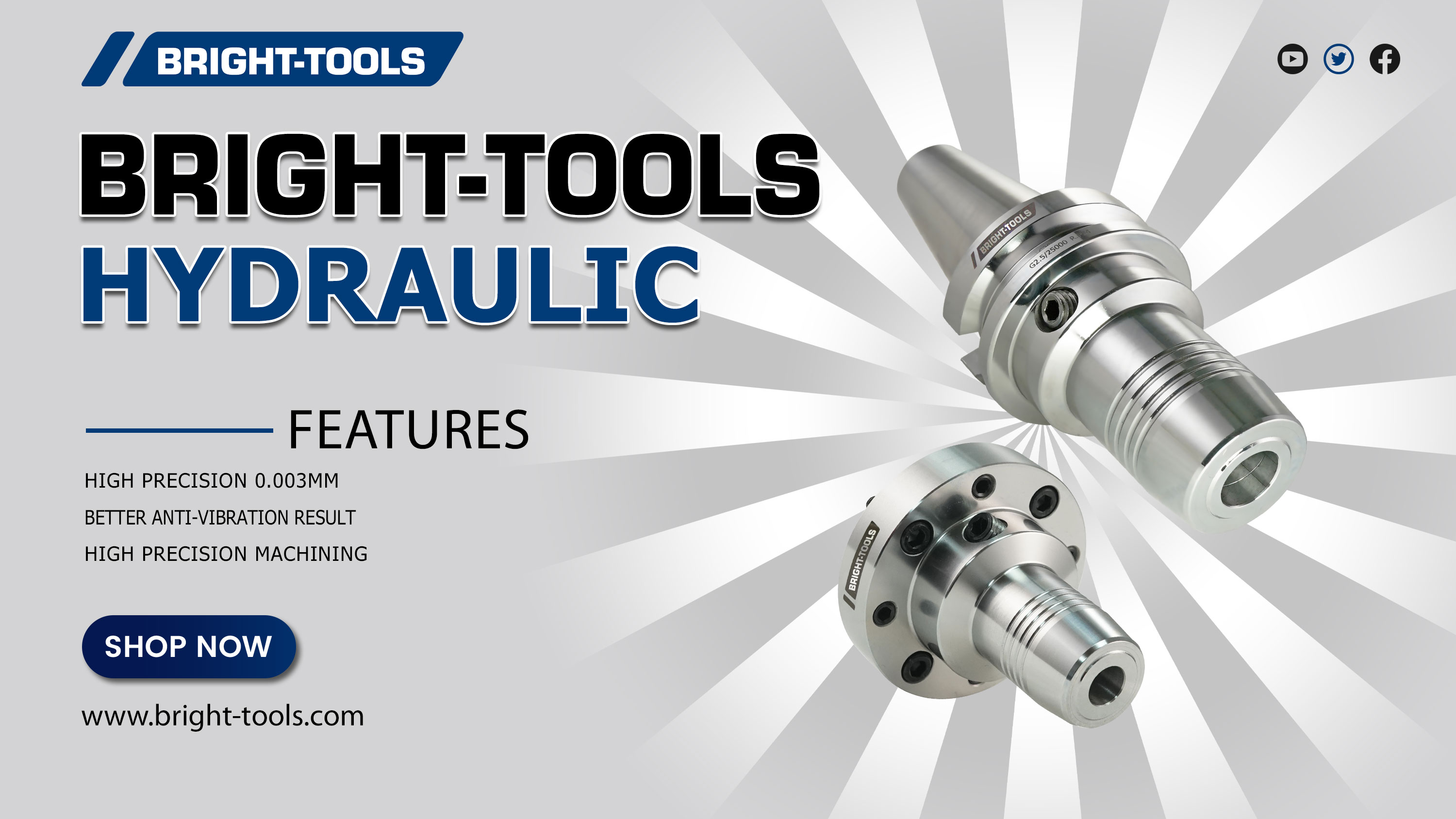
HSK hydraulic tool holders provide:
Excellent vibration damping
High concentricity
Fast tool changes
Superior surface finish
Recommended for:
Finish milling
Reaming
High-speed drilling
Precision finishing
An HSK collet chuck offers outstanding flexibility.
Advantages include:
Wide clamping range
Cost-effective tool changes
Suitable for drills, end mills, and reamers
High clamping accuracy
Ideal for general-purpose machining.
An HSK face mill holder is designed for larger milling cutters requiring maximum rigidity.
Applications include:
Face milling
Shoulder milling
Heavy roughing
Large diameter cutters
An HSK arbor supports shell mills and side-and-face cutters.
Compared with collet systems, arbors provide:
Higher rigidity
Better torque transmission
Improved cutter positioning
An HSK adapter allows compatibility between different tooling systems.
Typical conversions include:
HSK to ER collet
HSK to Weldon
HSK to hydraulic chuck
HSK extensions
Reduction sleeves
Adapters are useful when expanding tooling capability without replacing the spindle interface.
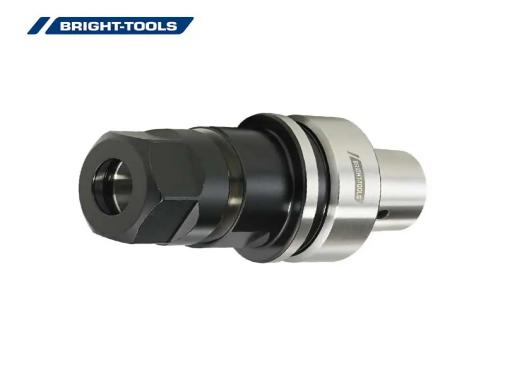
Several accessories enhance productivity and reliability.
An HSK coolant tube enables through-tool coolant delivery.
Benefits include:
Better chip evacuation
Improved tool life
Reduced cutting temperature
Enhanced deep-hole drilling performance
High-pressure coolant systems often rely on precision coolant tubes to maintain sealing performance.
Consider the following factors before selecting an HSK holder.
| Requirement | Recommended Interface |
|---|---|
| Maximum spindle speed | HSK E |
| Higher torque milling | HSK F |
| Graphite machining | HSK E |
| Precision engraving | HSK E |
| Mold roughing | HSK F |
| Aluminum machining | HSK F |
| Steel milling | HSK F |
| Medical components | HSK E |
| Large face milling | HSK F |
If your application emphasizes spindle speed and ultra-low runout, HSK E is generally the better choice.
If cutting force and torque transmission are more important, HSK F delivers superior performance.
A quality HSK tool system should offer more than interface compatibility.
Evaluate suppliers based on:
Taper accuracy
Dynamic balancing grade (G2.5 or better)
Runout accuracy
Material quality
Heat treatment process
Surface hardness
Coolant compatibility
Precision grinding
Inspection reports
Availability of multiple HSK tool holder types
Premium manufacturers also provide complete tooling systems covering:
Hydraulic holders
Collet chucks
Face mill holders
Arbors
Shrink fit holders
Adapters
Accessories
Selecting a trusted supplier ensures longer spindle life and more consistent machining quality.
Although HSK E and HSK F share the same hollow shank principle, they are engineered for different machining priorities. HSK E excels in ultra-high-speed, lightweight precision machining where balance and minimal rotating mass are critical, while HSK F delivers greater torque transmission and rigidity for demanding milling operations. Matching the correct interface with your spindle, cutting strategy, and tooling—including hydraulic holders, collet chucks, face mill holders, arbors, adapters, and Driven Tooling solutions—helps maximize machining accuracy, tool life, and production efficiency. For manufacturers investing in reliable HSK tool holders, selecting the right HSK standard is a key step toward achieving stable, high-performance machining.
No. HSK F generally provides higher torque transmission due to its larger drive keys, making it better suited for heavier milling.
No. The drive-key geometry differs, so the interfaces are not interchangeable even if the taper dimensions appear similar.
Electronics, PCB manufacturing, graphite machining, precision mold finishing, medical device production, and micro-machining commonly use HSK E.
HSK63F offers an excellent balance of rigidity, spindle speed capability, and torque transmission, making it suitable for a wide range of CNC milling applications.
For high-speed finishing requiring exceptional runout accuracy, HSK hydraulic tool holders are often preferred. For general-purpose versatility, an HSK collet chuck is an excellent choice, while an HSK face mill holder or HSK arbor is better suited to larger milling cutters and higher cutting loads.
 English
  日本語
日本語  한국어
한국어  Deutsch
  Español
  italiano
  русский
  tiếng việt
  Türkçe
  português
  فارسی
فارسی  zh-CN
zh-CN